




ASTM F1472 Ti-6Al-4V Grade 5 Titanium Wire
- Standard: ASTM F1472 (or contract-specified edition)
- Grade: Ti-6Al-4V (commonly called Grade 5)
- UNS: R56400
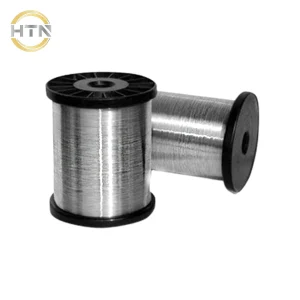
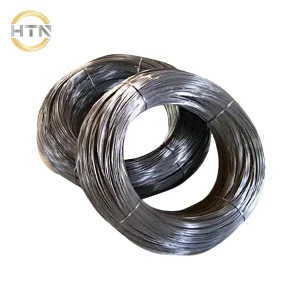
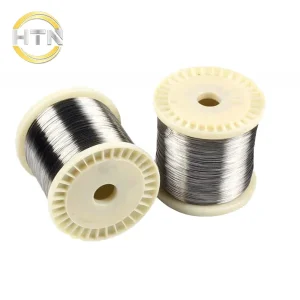
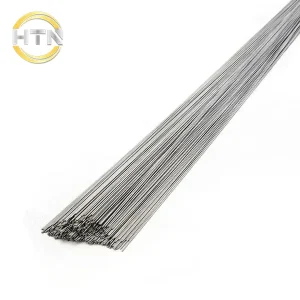
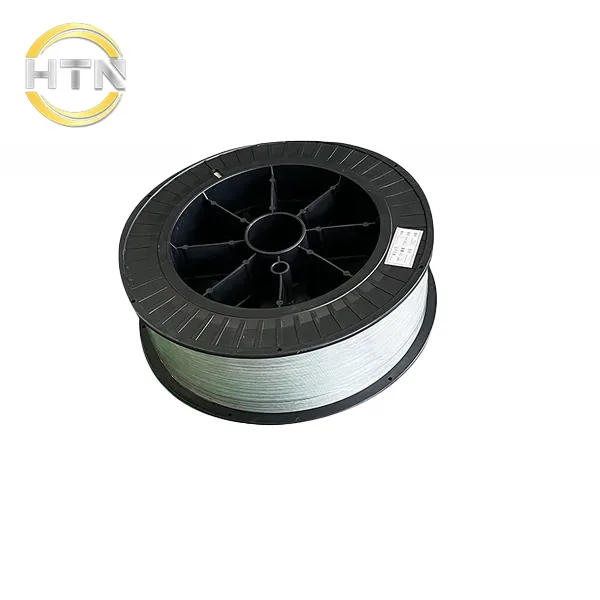
- Supply form: Coil, spool or cut straight length
- Condition: Annealed or ordered condition
Customizable sizes are available, while specific product parameters should be confirmed per the applicable standard edition and order.
Product Overview
ASTM F1472 titanium wire is wrought Ti-6Al-4V alpha-beta alloy wire for surgical implant manufacture, UNS R56400, commercially known as Grade 5. Aluminum stabilizes alpha and vanadium stabilizes beta, providing high strength at low density, good corrosion resistance and established manufacturability. This is conventional Ti-6Al-4V, not the ELI / Grade 23 alloy specified by ASTM F136.
Wire may be supplied in coils, on spools or as cut straight lengths. Typical uses include orthopedic fixation, spinal, trauma, dental and other surgical implant components. ASTM F1472 specifies medical-alloy raw material; the finished implant still requires device-level validation for actual diameter, delivery condition, cold work, microstructure, surface integrity, fatigue, cleaning, sterilization, biological evaluation and applicable regulation.
| Specification | Details |
| Industrial Standard | ASTM F1472 |
| Grades | Ti-6Al-4V |
| Diameter Range | Ø0.03–Ø7.0 mm |
| Typical Diameters | Ø0.1, 0.2, 0.3, 0.4, 0.5, 0.6, 0.8, 1.0, 1.2, 1.5, 2.0, 2.5, 3.0, 4.0, 5.0, 6.0, 7.0 mm |
| Supply Form | Coil / Spool or straightened and cut wire |
Medical-use boundary: ASTM F1472-compliant wire is medical-device raw material, not an approved finished implant. The device manufacturer remains responsible for design, forming/joining, surface treatment, cleaning, sterilization, biological evaluation, risk management and regulatory compliance.
Main Characteristics
- Medical conventional Ti-6Al-4V: Combines high specific strength, corrosion resistance and extensive clinical and engineering use. F1472 permits higher oxygen, iron and hydrogen limits than ASTM F136 Ti-6Al-4V ELI; the specifications and grades must not be labeled interchangeably.
- Controlled alpha-beta chemistry: Al, V, interstitial elements, yttrium and residual elements require heat-specific control for consistent strength, ductility, microstructure and drawing response.
- Good biocompatibility: A stable TiO2 passive film and extensive clinical use support its role as a common implant material. The finished device still requires biological evaluation under applicable regulations and standards such as ISO 10993.
- Good corrosion resistance: Performance is generally excellent in saline, body fluids and many chloride environments, but fretting, crevices, dissimilar-metal coupling, fluoride media and surface contamination require device-level evaluation.
- Weldable with strict shielding: Qualified laser, resistance, electron-beam or GTAW/TIG processes may be used. The pool, root and hot heat-affected zone require full inert-gas protection. Fine-wire joining must also control local melting, heat-affected-zone embrittlement and dimensional distortion.
- High strength with limited cold formability: Wire can be drawn, straightened, coiled and cold-bent to a limited extent, but has less room-temperature forming margin and greater springback than unalloyed titanium. Performance depends on diameter, annealed/cold-worked condition, surface quality and residual stress; complex forming requires lot-specific process qualification.
Chemical Composition
The following mass-percent limits apply to ASTM F1472 Ti-6Al-4V (UNS R56400). Formal purchasing and acceptance are governed by the contract edition, official ASTM text and original mill report:
| Element | ASTM F1472 Ti-6Al-4V requirement |
| Nitrogen, N | ≤0.05% |
| Carbon, C | ≤0.08% |
| Hydrogen, H | ≤0.015% |
| Iron, Fe | ≤0.30% |
| Oxygen, O | ≤0.20% |
| Aluminum, Al | 5.5-6.75% |
| Vanadium, V | 3.5-4.5% |
| Yttrium, Y | ≤0.005% |
| Residual elements, each | ≤0.10% |
| Residual elements, total | ≤0.40% |
| Titanium, Ti | Balance |
- Technical references: ASTM F1472 official scope and public abstract, plus producer data for Ti-6Al-4V / UNS R56400.
- Aluminum and vanadium: Al is 5.5-6.75% and V is 3.5-4.5%, producing a heat-treatable alpha-beta microstructure. Chemical homogeneity, melting and thermomechanical processing affect microstructure, drawing response and final device performance.
- Interstitials and iron: O, Fe, C, N and H affect strength, ductility, toughness and hydrogen-embrittlement risk. F1472 conventional Ti-6Al-4V limits differ from F136 ELI; purchasing, reports and identification must clearly distinguish them.
- Yttrium and residuals: Yttrium is limited to 0.005% maximum; each and total residual-element limits must follow the standard. The report must correspond to the heat and include the required chemistry, not only Al and V.
- Titanium content: The specification states Titanium: Balance. A nominal grade or medical-grade claim does not replace heat-specific analysis, the material report and contract testing.
Mechanical Properties
ASTM F1472 specifies room-temperature tensile requirements for wrought Ti-6Al-4V. Wire minimums vary with diameter, delivery condition, specimen form and gauge length. Common public reference ranges are 895-930 MPa ultimate tensile strength, 825-860 MPa 0.2% yield strength, 8-10% elongation and 15-25% reduction of area. Formal acceptance must use the applicable size table in the contract edition, and cold-drawn typical strength must not replace specified acceptance values.
| Property | Common ASTM F1472 wire minimum range | Note |
| Ultimate tensile strength | 895-930 MPa | Minimum varies by diameter, condition and specimen |
| 0.2% yield strength | 825-860 MPa | Minimum varies by diameter, condition and specimen |
| Elongation | 8-10% | Depends on diameter, gauge length and specimen |
| Reduction of area | 15-25% | Depends on diameter and specimen form |
ASTM F1472 Ti-6Al-4V Wire Mechanical-Property Reference
| Property | Ti-6Al-4V wire reference |
| Ultimate tensile strength | Specified minimum by size/condition: approx. 895-930 MPa |
| 0.2% yield strength | Specified minimum by size/condition: approx. 825-860 MPa |
| Elongation | Specified minimum commonly approx. 8-10% |
| Elastic modulus | Typical approx. 105-116 GPa |
Important: ASTM F1472 mechanical minimums must be applied with actual diameter, delivery condition, specimen form and gauge length. The table provides product-description reference ranges and does not replace the official size table in the contract edition, original mill report or lot acceptance. Raw-material compliance alone does not approve a finished implant.
HTN Supply and Quality Documentation
HTN organizes ASTM F1472 Ti-6Al-4V (Grade 5) medical titanium wire supply to customer purchase requirements. Material is produced by qualified titanium-mill resources. Original mill reports, heat/coil traceability, chemistry, mechanical and microstructure records can be supplied as agreed. HTN reviews the standard edition, diameter, tolerance, delivery condition, surface, straightness or coil requirements, weld restrictions and packaging, and can arrange independent retesting, microstructure examination, eddy-current or applicable surface-continuity testing, cutting, clean packaging and third-party inspection.
Typical Applications
- raw material for orthopedic cerclage wire, fixation systems and tension-band components;
- fine-diameter fixation or connecting components in spinal, trauma, cranio-maxillofacial and dental devices;
- surgical suturing, anchoring, elastic or precision connecting components, subject to device-design validation;
- medical wire stock for precision machining, coiling, braiding or forming;
- medical-device parts requiring high specific strength, good corrosion resistance and stable forming or joining response;
- coil, spool, cut-straight and precision-finished wire supplied to customer drawings;
- medical-device research, prototypes and custom implant material;
- international projects when ISO 5832-3, regulatory and customer supplementary requirements are also met.
Application boundary: ASTM F1472 Ti-6Al-4V wire is raw material for surgical implant manufacture, not an approved finished implant. The final device must separately meet applicable regulations, design validation, fatigue evaluation, biological evaluation, cleaning, sterilization and traceability requirements.
Fill in the form below and our team will be happy to assist you
Fabrication and Machining Characteristics
Drawing, Finishing and Dimensional Control
Ti-6Al-4V wire is commonly made by qualified multiple melting, ingot breakdown, wire-rod rolling, multiple cold- or warm-drawing passes, intermediate annealing where needed, final annealing, straightening and surface finishing. Control pass reduction, die condition, lubrication, tension and temperature to limit laps, scratches, internal defects, diameter variation, residual stress and within-lot variation.
Coiling, straightening and forming
Wire may be supplied in coils, on spools or as cut straight lengths. Straightening and coiling response depends on diameter, annealed condition, surface quality and residual cold work. Coil mandrel, repeated bending and device-forming processes should be qualified on the actual lot to avoid tight-radius cracking, tool damage and excessive local work hardening.
Annealing and heat treatment
Material acceptance under ASTM F1472 follows the contract-specified condition, with annealed material used as the normal product-description baseline. Intermediate anneals may restore ductility and a controlled final anneal establishes the ordered microstructure and properties. For cold-worked supply, specify cold-work level, strength range, elongation and downstream forming needs. Avoid grain coarsening, continuous grain-boundary alpha, coarse elongated alpha platelets, alpha case, oxidation and hydrogen pickup.
Welding and joining
Qualified laser, resistance, electron-beam or GTAW/TIG joining may be used. Remove oil, oxides and drawing residue before joining and fully shield hot metal. Because fine-wire welds have concentrated thermal cycles, the finished device must validate joint microstructure, strength, fatigue, corrosion resistance and cleanliness.
Typical Physical Properties
The following are typical values for Ti-6Al-4V near room temperature. Unless explicitly required by the standard or contract, they are not routine ASTM F1472 lot-acceptance values:
| Physical property | Reference value |
| Density | Approx. 4.43 g/cm³ |
| Elastic modulus at room temperature | Approx. 105-116 GPa |
| Thermal conductivity at room temperature | Approx. 6.7 W/(m·K) |
| Mean CTE, 20-100°C | Approx. 8.6×10⁻⁶/K |
| Solidus/liquidus reference | Approx. 1604-1660°C |
| Poisson’s ratio | Typically approx. 0.34 |
| Crystal structure at room temperature | Alpha + beta |
| Magnetism | Essentially non-magnetic |
| Strengthening mechanism | Solid solution, microstructure control and optional heat treatment |
| Specific heat at room temperature | Typically approx. 526 J/(kg·K) |
Physical-property reference: Producer data for Ti-6Al-4V / UNS R56400. Values vary with temperature, microstructure, orientation, diameter, cold work and heat treatment.
Corrosion Resistance
Ti-6Al-4V develops a spontaneous, renewable TiO₂ passive film and generally resists saline, body fluids and many aqueous chlorides. Wire performance also depends on surface scratches, drawing-lubricant residue, fretting, wear, crevices, dissimilar metals, electrochemical conditions, bending residual stress and cleaning or sterilization residue.
Environments in Which Grade 5 Generally Performs Well
- Saline and many simulated-body-fluid environments;
- humid air and high-purity water;
- neutral chloride solutions;
- many oxidizing environments;
- properly controlled cleaning and passivation processes;
- many medical-device sterilization processes after device validation;
- long-term tissue contact without fretting;
- validated orthopedic, spinal and dental implant environments.
Environments Requiring Careful Evaluation
- Fluoride cleaners, hydrofluoric acid or high-fluoride oral conditions;
- local acidification in oxygen-starved crevices;
- combined fretting, wear and corrosion;
- galvanic coupling with unsuitable dissimilar metals;
- cathodic hydrogen charging or improper electrochemical treatment;
- strong reducing acids;
- hot concentrated salts or unusual disinfection chemicals;
- areas containing particles, residues or surface damage;
- new uses lacking device-level corrosion and biological validation.
Engineering caution: Biocompatibility, fatigue and body-fluid corrosion performance are not determined by grade alone. Wire cleanliness, microstructure, surface scratches, drawing residue, residual stress, cold work, fretting, wear, crevices, dissimilar metals, fluoride exposure and sterilization residue can affect the final device.
Typical Industry Manufacturing Route for ASTM F1472 Ti-6Al-4V Titanium Wire
- Raw-material selection and charge preparation: Use qualified titanium raw material, aluminum-vanadium master alloy and strictly controlled clean revert, closely controlling O, Fe, C, N, H, Y and residual elements.
- Electrode preparation: Homogenize, compact and weld consumable electrodes while avoiding high-density inclusions, low-density inclusions, oil, moisture and foreign contamination.
- Melting and ingot production: Use a qualified multiple-melting route meeting ASTM F1472 and purchase requirements, controlling chemistry uniformity, inclusions and ingot quality. The method, number of melts and supplementary raw-material restrictions follow the standard and order.
- Ingot conditioning and wire-rod rolling: Crop unsuitable ends, remove surface defects, break down the cast structure by forging/rolling, and roll to wire rod suitable for drawing. Thermomechanical processing should produce a fine alpha-beta dispersion without continuous alpha at prior-beta grain boundaries or coarse elongated alpha platelets.
- Drawing and intermediate annealing: Draw through multiple passes with controlled dies, lubrication, tension, pass reduction and temperature. Use intermediate annealing where needed to restore ductility and control microstructure and residual stress.
- Final annealing and surface conditioning: Apply the ordered final anneal or specified cold-work control; remove scale, alpha case and drawing residue; prevent hydrogen pickup and iron contamination; and achieve the ordered microstructure, properties and clean surface.
- Straightening, coiling and finishing: Supply cut straight lengths, coils or spools as ordered, controlling diameter, tolerance, roundness, straightness/cast, surface roughness, weld count and coil weight.
- Cleaning: Use validated mechanical or chemical cleaning to prevent oil, abrasive, iron, chlorinated-cleaner and pickling residue. Final implant precision cleaning and sterilization remain the device manufacturer responsibility.
- Inspection: Verify chemistry, tensile properties, diameter, surface and identification by heat or lot, and examine microstructure and surface contamination as required. Eddy-current testing, wire continuity, straightness/cast, roughness or supplementary examinations follow the order. Ultrasonic testing is not universal for fine wire.
- Identification, packaging and traceability: Maintain one-to-one correspondence among heat, lot, coil/spool, wire and report. Use clean, dry, scratch-resistant packaging to prevent tangling, mix-ups and cross-contamination.
Manufacturing and inspection note: ASTM F1472 specifies chemistry, mechanical properties, microstructure and surface-contamination requirements. Diameter, tolerance, delivery condition, supplementary melting requirements, coil/spool/straight form, weld restrictions, straightness or cast, roughness, continuity testing, clean packaging, EN 10204 3.1 documentation and third-party inspection must be confirmed in the purchase order.