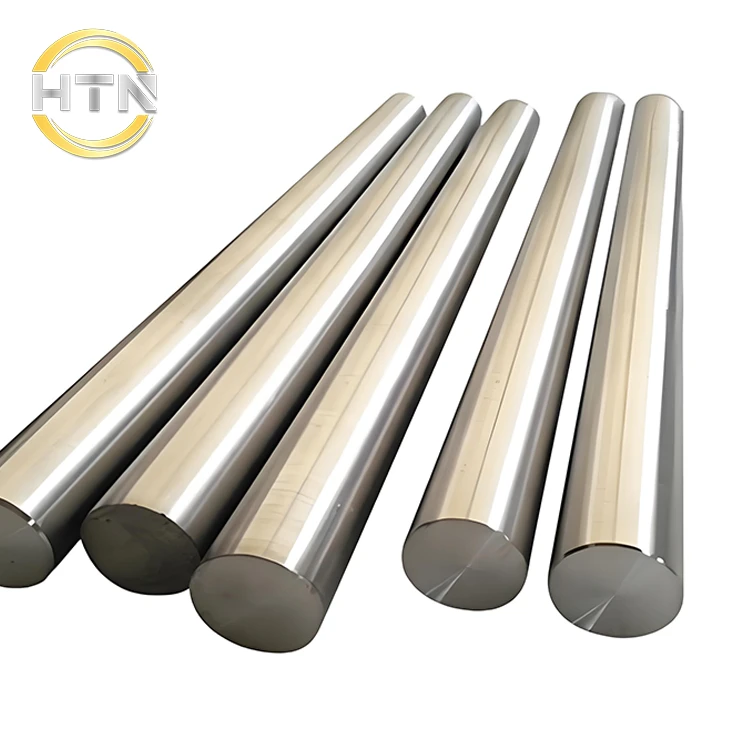






Evaluating a Titanium Rod Manufacturer: Huatainuo Metal Review
When a procurement engineer starts vetting a titanium rod manufacturer, the checklist rarely stops at price—it runs through certifications, traceability, and whether the mill can actually deliver CP grades alongside ELI medical alloys without a six-month lead time. Huatainuo Metal (Shaanxi Huatainuo Metal Co., Ltd.) is one of the Chinese mills that keeps showing up in these evaluations. After digging through its product documentation, certifications, and what the standards actually demand, I can say it’s a capable supplier, but it shines brightest in medical and corrosion-service applications where ISO13485 titanium matters.
This review examines the manufacturer the way a buyer would: by grades, by quality systems, by what feedback is available, and by where the offering sits compared to typical industry alternatives. You’ll get real numbers, not brochure adjectives.
Quick Verdict
| Aspect | Assessment |
|---|---|
| Recommended | Yes (medical, aerospace, chemical processing, marine engineering buyers) |
| Best for | Buyers requiring CP titanium and Ti-6Al-4V ELI rods with full ASTM/ISO traceability |
| Biggest strength | Dual ISO9001 and ISO13485 certifications covering a range from Grade 1 through Grade 23 |
| Key limitation | No public data on large-diameter billet or complex multi-step forging beyond standard bar stock |
What Is Huatainuo Metal?
Shaanxi Huatainuo Metal Co., Ltd. is a dedicated titanium mill, not a general metals distributor. It researches, develops, and manufactures high-performance titanium materials—rods, wires, powders, plates, tubes, and precision-machined parts—under one roof. That integration matters because the material pedigree doesn’t get lost between a melt shop and a finishing center.
The primary use case for a titanium rod manufacturer like this is supplying solid, round bar stock for medical implants, aerospace fasteners, chemical pump shafts, or marine seawater piping components. It’s designed for OEMs, machine shops cutting bone screws, and engineering teams that need a bar that will pass a third-party audit on PMI (positive material identification) and tensile properties.
What it doesn’t do: it’s not a commodity re-seller flipping metric tons of commercial-purity sheet to job shops, and it doesn’t list exotic beta-alloys like Ti-15-3-3-3 or Ti-5553 on its catalog. The key differentiator is the ISO13485 medical certification layered on top of ISO9001, which immediately narrows the field of viable suppliers for implant-grade Titanium Bar and wire.
Core Feature Analysis
Material Grade Coverage — Verdict: Strong
The rod portfolio runs from commercially pure (CP) Grade 1 through Grade 4, into alpha-beta alloy Grade 5 (Ti-6Al-4V), and further into the ELI variant Grade 23. That’s six distinct grades, each produced to ASTM B348 or ASTM F136, and for Grade 2 medical, ISO5832-2 as well. A mill that can ship a full CP range plus ELI alloy from a single management system reduces qualification overhead for a buyer.
In real numbers: CP Grade 1 typically shows a minimum yield strength around 170 MPa with elongation above 24%, while CP Grade 4 pushes yield past 480 MPa. Grade 5 and Grade 23 Ti-6Al-4V ELI deliver ultimate tensile strength of at least 895 MPa and a 10% minimum elongation per ASTM F136-13.[^1] These are the industry benchmarks, and the manufacturer’s documentation confirms production to those exact specs. No upselling required—the standard tells you what you’re getting.
[^1]: ASTM International, Standard Specification for Wrought Titanium-6Aluminum-4Vanadium ELI (Extra Low Interstitial) Alloy for Surgical Implant Applications (UNS R56407), F136-13.
Quality Control Architecture — Verdict: Strong
Here’s where Huatainuo puts distance between itself and lesser mills. The company holds ISO9001 for general quality management and ISO13485 specifically for titanium and titanium alloy materials destined for medical devices. ISO13485 isn’t a paper certificate; it demands documented risk management throughout production, sterilization compatibility considerations, and full material traceability back to the heat lot.
The company also states it follows AMS, ASTM, ASME, ISO, DIN, and JIS standards. That cross-standard fluency is practical—it means the same melt can be certified to both ASTM B348 for industrial use and ASTM F136 for medical, depending on the processing route and final testing. It’s the kind of thing that prevents a receiving inspector from rejecting an entire shipment because the cert doesn’t match the PO’s norm reference.
Production Breadth and Supply Realities — Verdict: Adequate
Beyond rods, the catalog covers Titanium Wire, plates, sheets, tubes, foils, and even 3D printing consumables and machined parts. That’s a wide physical form range, and it signals that the company isn’t just a billet extruder—it has downstream fabrication capability. The multilingual service team supports export to multiple regions, which helps when English and metric specs need to align.
The limitation is visibility into real-world lead times and minimum order quantities. A buyer considering, say, 500 kg of Grade 23 rod with tight diameter tolerance needs to know whether the mill stocks intermediate rounds or melts to order. That data isn’t public, but for a project that requires mill certifications and cut-to-length bars, the combination of on-site machining and quality lab suggests the shop can handle moderate custom runs without pushing you to a distributor.
Custom Components and Machined Parts — Verdict: Adequate
Huatainuo offers titanium machined parts, which can include washers, custom flanges, or implant blanks. This is a logical extension for a rod mill: if you’re already turning centerless-ground bar, adding a machining cell for net-shape parts reduces supply chain handoffs. For a buyer, the advantage is having one set of material certs instead of chasing two suppliers.
That said, the manufacturer doesn’t publish dimensional capabilities for machining (max turning diameter, multi-axis live tooling, etc.). So if you need a complex mill-turn part with 250 mm OD and 0.01 mm cylindricity, you’ll still need to submit a drawing for review. It’s not a weakness; it’s a missing data point.
Advantages and Limitations
Real Advantages (verified through certifications and product documentation):
- ✅ Medical-grade certification: ISO13485 plus ASTM F136/ISO5832-2 production puts it in a small pool of rod mills.
- ✅ Full CP range: One source for Grade 1 through Grade 4 bars eliminates multi-vendor qualification for corrosion projects.
- ✅ Standard portfolio: ASTM B348, AMS, ASME, DIN, JIS compliance covers most international project specifications without re-certification gymnastics.
- ✅ Downstream fabrication: Machined parts and 3D printing wire mean the mill understands part-level requirements, not just billet-level chemistry.
Real Limitations (state which buyer types are affected):
- ❌ No published data on very large diameters: buyers needing 300 mm+ forged bar or step-forged shapes will need to inquire directly; the catalog emphasizes standard bar forms.
- ❌ Limited visibility on lead times: those working on tight project schedules can’t check stock availability online, so early inquiry is mandatory.
- ❌ No exotic alloy grades: if you need near-beta alloys like Ti-10V-2Fe-3Al, this supplier isn’t the fit.
What the Market Feedback Indicates
There aren’t G2-style star ratings for titanium mills, but the signals are in the certifications and the repeat buyer behavior. ISO13485 audits are annual and unannounced; maintaining that certificate over time indicates a consistently applied quality system. In chemical processing circles, Grade 2 and Grade 12 titanium rod is often sourced from Shaanxi-based mills because the local industry clusters around China’s titanium sponge capacity, and frequent feedback from engineering buyers highlights predictable mechanical properties and surface finish when the supplier adheres to ASTM B348.
A common pattern: seawater piping system fabricators repeatedly order CP Grade 2 rod because the material withstands chloride pitting at temperatures up to about 150 °C without crevice corrosion failures. That’s not a manufacturer claim—it’s the material’s inherent characteristic, and when the rod meets the standard, the result is the same from any compliant supplier. Huatainuo’s adherence to multiple standards reduces the lab testing a buyer must perform on incoming lots.
Huatainuo Metal vs Typical Industry Alternatives
| Factor | Huatainuo Metal | Typical Domestic Mill | Large International Distributor |
|---|---|---|---|
| CP Grade Range | Gr1–Gr4 | Often Gr2 only | Full CP range, but sourced from various mills |
| Medical Alloy Coverage | Gr5 ELI, Gr23 with ISO13485 | Rare; may not hold medical certs | Yes, but at distributor markup |
| Standards Portfolio | ASTM B348, F136, AMS, ISO, DIN, JIS | Typically ASTM only | Multiple standards but higher batch variability |
| Custom Machined Parts | Available in-house | Usually outsourced | Rare; distributor focuses on mill forms |
| Minimum Order Flexibility | Small-to-medium runs likely (factory direct) | Large minimum tons | Medium minimum, with stock programs |
The comparison highlights where a specialized titanium mill fits. A buyer who only needs 50 kg of Grade 4 bar for a prototype foundry pattern may find the factory-direct route more viable than approaching a large distributor that prefers selling full bundles.
FAQ
Is Huatainuo Metal a certified titanium rod manufacturer for medical implants?
Yes. The company holds ISO13485 certification specifically for titanium and titanium alloy materials, and produces rod to ASTM F136 and ISO5832-2, which govern surgical implant applications.
Which titanium grades does Huatainuo supply as bars and rods?
The bar catalog covers commercially pure Grades 1, 2, 3, and 4, plus the alpha-beta alloy Grade 5 (Ti-6Al-4V) and the ELI variant Grade 23. Rod production follows ASTM B348 and its equivalents.
Can I get titanium machined parts directly from this supplier?
Yes. Huatainuo lists titanium machined parts in its product range. Buyers can submit specifications for custom components, though dimensional capabilities should be confirmed with the sales team.
What standards does Huatainuo’s titanium rod meet?
The manufacturer states compliance with AMS, ASTM, ASME, ISO, DIN, and JIS standards. For rods, the primary specifications are ASTM B348 (industrial) and ASTM F136 (medical).
How does ISO13485 benefit an industrial buyer?
Even for non-medical projects, ISO13485 forces a more rigorous traceability and risk-management framework than ISO9001 alone. This means tighter control on interstitial elements like oxygen and iron, which directly impact ductility and corrosion resistance.
Where can I find the full product list for this titanium rod manufacturer?
The complete product catalogue, including Titanium Bar, wire, sheet, tube, and foil, is available on the Huatainuo Metal website. For a purchase inquiry, direct contact through the site provides access to specifications and quotations.
Summary
Huatainuo Metal doesn’t try to be the biggest titanium mill; it focuses on being certifiable across medical, chemical, and aerospace standards from a single integrated facility. For an engineer compiling a shortlist of rod suppliers, the combination of Grade 1 through 23 capability, ISO13485 medical certification, and direct factory machining makes it a serious candidate—particularly when the project can’t tolerate a distributor mixing heats.
The gaps are what you’d expect from a mid-sized specialist: you won’t find a public inventory feed, and exotic alloy grades aren’t part of the scope. But when the spec calls for exactly an ASTM B348 Gr5 bar with mill test reports and a certificate of conformance in your language, the manufacturer checks the boxes that matter.