






Driven by the dual forces of an aging population and the rising incidence of cervical and lumbar spinal disorders, the orthopedic implant market is undergoing a profound technological transformation. Among these developments, 3D-printed titanium alloy interbody fusion cages, leveraging the unique advantages of additive manufacturing, are emerging as a significant direction in spinal surgical treatment.
Technological Breakthrough: From Conventional Machining to Additive Manufacturing
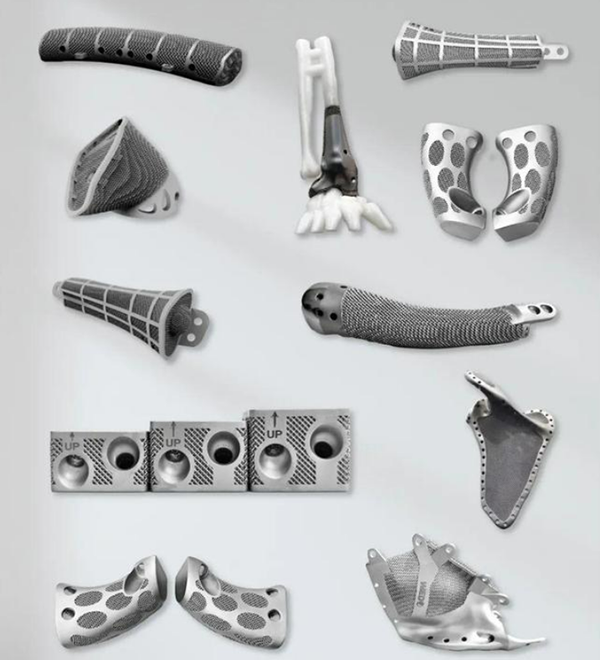
Although traditional titanium alloy interbody fusion cages have been widely used, issues concerning their long-term stability post-implantation have become increasingly apparent. The introduction of 3D printing technology offers a novel solution to this challenge. Through biomimetic porous structure design, 3D-printed fusion cages can replicate the microstructure of human cancellous bone, significantly enhancing osseointegration efficiency and promoting bone tissue ingrowth into the porous architecture, thereby achieving more robust biological fixation.
In terms of material selection, medical-grade titanium alloy, owing to its exceptional corrosion resistance, excellent biocompatibility, and superior mechanical properties, has become the ideal material for 3D-printed interbody fusion cages. However, the elastic modulus of conventional titanium alloys is considerably higher than that of human bone, which can readily induce stress-shielding effects, leading to bone resorption and implant loosening. 3D printing technology addresses this by constructing porous lattice structures that can reduce the elastic modulus to a level approximating that of cortical bone, effectively mitigating the stress-shielding problem.
Clinical data demonstrate the notable fusion advantages of 3D-printed titanium alloy fusion cages. A multicenter study involving 114 patients undergoing anterior lumbar interbody fusion (ALIF) reported fusion rates of 99.0% and 98.2% at 12 and 24 months post-surgery, respectively, with cage-related complications at only 3.5%, and significant improvements in patient back pain visual analog scale (VAS) scores. Another meta-analysis comparing 3D-printed titanium alloy cages with titanium-coated PEEK cages in transforaminal lumbar interbody fusion (TLIF) procedures (incorporating 12 studies with 627 patients) showed fusion rates of 91% for the 3D-printed titanium group and 88% for the titanium-coated PEEK group, a difference that was not statistically significant. Nevertheless, the theoretical advantages of 3D-printed titanium in osseointegration continue to attract clinical interest.
Broad Application Scenarios and Continuously Unleashing Market Demand
Depending on the implantation site, 3D-printed titanium alloy interbody fusion cages can be applied across various spinal segments, including cervical, thoracic, and lumbar regions. They are widely utilized in numerous clinical scenarios such as lumbar disc herniation, lumbar spinal stenosis, cervical vertebral fractures or dislocations, and spinal revision surgeries. With the continuous expansion of the cervical and lumbar patient population in China, the clinical demand for high-performance interbody fusion cages is growing rapidly.
In the field of minimally invasive surgery, 3D-printed titanium fusion cages have also demonstrated favorable prospects. A study comparing unilateral biportal endoscopic TLIF (UBE-TLIF) with open TLIF using 3D-printed titanium fusion cages revealed one-year fusion rates of 95.2% and 100%, respectively, with no statistically significant difference, indicating that 3D-printed titanium fusion cages are equally suitable for minimally invasive spinal surgery scenarios.
From a global market perspective, the worldwide interbody fusion cage market exceeded USD 3.1 billion in 2024, with lumbar fusion cages accounting for approximately USD 1.5 billion. The global market size for interbody fusion cages was approximately RMB 20.2 billion in 2025, with a projected compound annual growth rate (CAGR) of 3.3% between 2026 and 2030. The global titanium alloy interbody fusion cage market is expected to reach sales of RMB 36.07 billion by 2031, with a CAGR of 7.2%. Against this backdrop, 3D-printed titanium alloy interbody fusion cages are poised to see their market share steadily increase, driven by their technological advantages and clinical value.
Accelerating Localization and Emerging Industrial Landscape
China’s 3D-printed titanium alloy interbody fusion cage sector has witnessed the emergence of a number of enterprises with independent research and development capabilities, including Zhisu Health Technology (Jiaxing), Huaxiang Medical, Wedge (Xi’an) Biomedical Technology, and Shanghai Sanyou Medical, among others. In February 2022, the “Titanium Alloy 3D-Printed Porous Interbody Fusion Cage,” developed by Huaxiang Medical and representing the first domestically produced metal 3D-printed (SLM) device of its kind, received market approval, marking the official entry of China’s spinal interbody fusion treatment into the new era of “laser 3D-printed titanium alloy implants.” In July 2024, Shanghai Sanyou Medical’s 3D-printed “Metal Additively Manufactured Cervical Fusion Cage” obtained registration approval from China’s National Medical Products Administration (NMPA), while its thoracolumbar fusion cage series also received FDA 510(k) clearance in 2023.
In the realm of customized applications, the Shaanxi Provincial Medical Products Administration has registered Wedge (Xi’an) Biomedical Technology’s “3D-Printed Artificial Vertebral Body (Customized)” as a customized medical device. This product utilizes selective laser melting (SLM) technology and can be tailored according to individual patient anatomical parameters. As the R&D capabilities of Chinese enterprises continue to advance, the variety and quantity of domestically manufactured 3D-printed titanium alloy interbody fusion cages receiving market approval are expected to increase, offering a broader selection for spinal surgical treatments.
Gradual Improvement of Standards System, Guiding Standardized Industry Development
To promote the healthy and orderly development of the 3D-printed titanium alloy interbody fusion cage industry, China has introduced a number of relevant standards, including “Spinal Implants — Additively Manufactured Titanium Alloy Interbody Fusion Cages,” “Additive Manufacturing — Test Method for Impact Resistance of Metal Interbody Fusion Cages,” and “Additive Manufacturing — Biomechanically Adapted Titanium Alloy Interbody Fusion Cages.” Additionally, the national standard project “Basic Requirements for the Construction of Medical-Engineering Interaction Platforms for Additively Manufactured Medical Devices” has been formally established, under the purview of the National Medical Products Administration, aiming to regulate the full lifecycle data traceability process from clinical demand to product delivery.
In terms of quality control, the National Medical Products Administration’s “Guidelines for the Evaluation of Surface Morphology of Orthopedic Implants” designates micro-nano measuring instruments as Class A arbitration equipment for the first time, achieving 0.1 μm resolution. Production line validation has shown that after 100% inspection using this equipment, the surface roughness Ra of 3D-printed interbody fusion cages can be controlled within 1.6 ± 0.2 μm, pore interconnectivity stabilized at 65% ± 3%, and the 6-month postoperative subsidence rate reduced from 2.8% to 0.9%. The implementation of these standards provides clear technical specifications for product quality control, performance evaluation, and clinical application, effectively driving the standardization and normalization of the industry.
Frontier Exploration: Intelligence and New Materials Opening New Possibilities
As 3D-printed titanium alloy technology continues to mature, the industry frontier is expanding in two directions: intelligentization and novel materials.
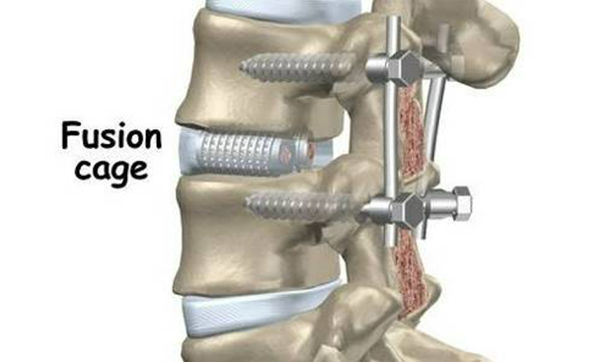
In April 2026, Canary Medical, a company specializing in intelligent implantable sensors, announced a strategic collaboration with NanoHive Medical, a 3D-printed spinal fusion device company, to embed implantable sensing technology into NanoHive’s Hive Soft Titanium fusion cage. This cage features a rhombohedral dodecahedron lattice structure with a porosity of up to 70%, which not only reduces stress shielding but also provides a natural physical housing space for miniature sensor modules. The sensors can monitor fusion segment mobility, load transfer patterns, and interface micromotion, offering early warning signals for pseudoarthrosis formation months earlier than radiographic examinations. The global spinal implant market reached USD 11.8 billion in 2024 and is projected to grow to USD 16.9 billion by 2034, with intelligentization considered a key direction poised to reshape the industry landscape.
In the exploration of new materials, porous tantalum has garnered attention due to its excellent osteogenic properties. Studies indicate that the elastic modulus of 3D-printed porous tantalum can approach that of cancellous bone (3–4 GPa), effectively alleviating stress shielding while exhibiting superior osteoconductivity and osteoinductivity. Customized porous tantalum vertebral fusion cages, fabricated using selective electron beam melting (SEBM) technology, have been clinically applied in complex cervicothoracic fusion surgeries. With an average postoperative follow-up of 24.3 months, patients experienced significant pain relief with no severe complications reported. This direction offers more diverse therapeutic options for cases involving complex spinal deformities and tumors.
Outlook: Technological Iteration Driving Market Expansion
Looking ahead, as metal 3D printing technology continues to mature, materials science advances, and clinical applications further expand, 3D-printed titanium alloy interbody fusion cages are expected to secure a larger share of the spinal surgical implant market. Notably, as the market evolves from a “technology narrative” to a “mature product category,” the competitive focus is shifting from “whether to adopt 3D-printed titanium alloy” to “which design performs better in specific surgical approaches.” The exploration of frontier technologies such as personalized customization, intelligent sensing, and multi-material composite printing will also inject new growth momentum into this field. It is foreseeable that 3D-printed titanium alloy interbody fusion cages will become a prominent representative of China’s high-end medical device industry’s transition toward “intelligent manufacturing.”