





At the 2026 Red Dot Award: Design Concept ceremony, a onepiece wheelchair made from aerospacegrade titanium alloy and formed by selective laser melting (SLM) additive manufacturing won the highest honour – the “Best of the Best” award. Competing against thousands of entries from around the globe, this is not only the first time a Chinese wheelchair design has received such international recognition, but also one of the rare cases in Red Dot history where titanium additive manufacturing has been applied to a consumeroriented, everyday product. More than a design accolade, the award signals that additive manufacturing is moving decisively from highend domains such as aerospace and advanced medical implants towards the massmarket rehabilitation assistive device sector.
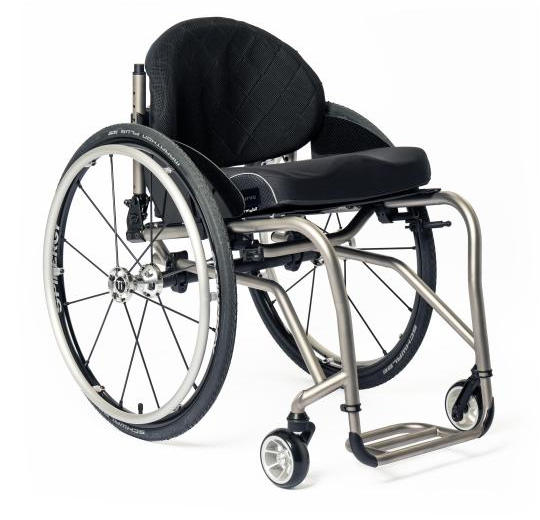
1.The Award’s Prestige – What a Sub2% Success Rate Means The Red Dot Award, together with Germany’s iF Award and the US IDEA Award, is recognised as one of the world’s top three design honours. According to official statistics, the overall acceptance rate for the Red Dot: Design Concept category has consistently remained below 2%, and the “Best of the Best” title is given to only a handful of entries worldwide each year – making it an exceptionally competitive distinction. The jury’s evaluation of this wheelchair focused on three dimensions: Material innovation – introducing aerospacegrade titanium into everyday mobility aids, breaking the traditional material framework of steel, aluminium or ordinary carbon fibre. Technological integration – the onepiece SLM forming process eliminates the structural weakness of welded joints, achieving a simultaneous leap in mechanical performance and aesthetic expression. Social value – through a customised digitalhealth pathway, the product redefines the wheelchair from a “massproduced” item into a “personally fitted” rehabilitation solution. Notably, previous Best of the Best winners have mostly come from concept cars, smart wearables, sustainable architecture and other popular fields; assistive devices for daily living have rarely been shortlisted. This win marks the international design community’s forwardlooking endorsement of the deep integration of additive manufacturing and the ageingcare / rehabilitation industry, while also giving Chinese manufacturing a stronger voice in setting standards within this niche.
2.A Fundamental Shift in Manufacturing Thinking – From “Assembly” to “Growth” Traditional wheelchair manufacturing follows a typical “disassembleprocessassemble” workflow: the frame is made from dozens of tubes that go through cutting, bending, welding, grinding, painting and many other steps. This approach has three inherent limitations: First, the trade off between weight and strength is hard to reconcile. To guarantee loadbearing safety, the tube wall thickness must stay above a certain threshold, and additional reinforcements and connectors add further weight. As a result, conventional wheelchairs (excluding batteries) generally weigh between 15 and 25 kg – a significant burden for elderly users and people with disabilities when lifting, folding or getting in and out of vehicles. Second, welded joints are concentrated zones of failure risk. Nonuniform heating during welding introduces residual stresses, and the microstructure in the heataffected zone undergoes phase changes, making it a prime site for fatigue crack initiation under cyclic loading. Statistics show that over 70% of wheelchair frame fractures occur in or near the weld heataffected zones. Third, mass production tooling limits ergonomic finetuning. Standardised tubebending dies can only produce a limited range of sizes, making it difficult to adjust for different heights, weights, limb proportions and even individual sitting habits. This awardwinning product fundamentally flips the manufacturing mindset: the frame is redesigned as an integrated biomimetic structure, where “growth” replaces “assembly.” The design team drew algorithmic inspiration from honeycomb hexagons and the spongy microarchitecture of bone tissue. In highstress areas, solid material is retained; in secondary loadbearing regions, honeycomb lattice structures replace solid sections. This variabledensity lattice design can reduce weight by 30 40% while maintaining or even increasing overall stiffness – because lattice structures distribute stress more evenly, avoiding the concentration points found in bent tubes. The onepiece design also enhances structural integrity. With no welded joints, the frame is built continuously during the SLM process, with metallic grains growing epitaxially, free from the interfacial bonding issues of traditional welds. Subsequent heat treatment uniformly eliminates residual stresses throughout the component, significantly improving fatigue resistance and extending the expected service life of the entire chair.
3.Matching Titanium Alloy with SLM – Strengths and Challenges Titanium alloy (TC4 / Ti 6Al 4V, aerospace grade) has become a star material in additive manufacturing for three key reasons: Specific strength (strengthtoweight ratio) far exceeds that of steel and aluminium, making it ideal for lightweight design. Corrosion resistance is excellent, suitable for humid, sweaty daily environments. Biocompatibility is good – it does not cause skin allergies and releases no toxic substances. However, producing large, thinwalled titanium components via SLM is far from trivial. The wheelchair frame has an overall footprint that exceeds the standard build envelope of many SLM machines, and its fine lattice struts and continuously curved surfaces pose severe process control challenges: Oxidation control: Titanium has a strong affinity for oxygen, nitrogen and hydrogen at high temperatures. If the protective atmosphere is inadequate, oxygen in the melt pool can form a brittle αcase layer, drastically reducing ductility. The manufacturing team used highpurity argon (≥99.999%) for fullprocess inertgas shielding, keeping the oxygen level inside the build chamber strictly below 100 ppm. Thermal stress management: The SLM process involves extremely rapid heating and cooling, and large thinwalled structures are prone to warping or even cracking due to steep temperature gradients. Through coupled thermomechanical simulations, the scanning strategy and laser power distribution were optimised in advance – using zonebyzone scanning, alternating inward/outward jumps and other methods to spread heat input and keep thermal deformation within design tolerances. Postprocessing cleaning: The narrow internal channels of the lattice make it difficult to remove residual powder. The team employed a combination of ultrasonic vibration and highpressure inertgas purging, followed by industrial endoscope inspection of every zone to ensure internal cleanliness met longterm usage requirements. Throughout the entire process, aerospacegrade CT defect scanning and CMM (coordinate measuring machine) dimensional inspection were applied to every finished part – with zero tolerance for porosity, cracks, lackoffusion or other defects, and dimensional accuracy controlled within ±0.1 mm. This level of quality control is exceptionally rare in the civilian assistivedevice sector.
The Complete Customisation Loop – From Digital Twin to Physical Object The customisation pathway for this product is not simply scanandprint; it is a full digitalhealth closed loop: Step 1 – Data acquisition: Using a 3D body scanner and a multipoint array pressuremapping mat, the user’s full external body contours and the pressure distribution heatmap of the buttocks, thighs and back in a sitting posture are captured. Step 2 – Digital modelling: The data are fed into a proprietary algorithm platform, which automatically generates a frame geometry precisely matched to the user’s body – including seat width, seat depth, armrest height, backrest recline angle, centreofgravity position and other critical parameters. Based on the pressure distribution data, the lattice density is programmed differentially – denser in highpressure zones and sparser in lowpressure zones – achieving “targeted mechanical response.” Step 3 – Onepiece printing: The bespoke digital model drives the SLM machine directly to build the frame in a single run, without any subsequent welding or bolted assembly. This eliminates multistep cumulative tolerances, ensuring “design equals outcome.” For the end user, the experiential difference is transformative: the wheelchair is no longer an “external attachment” to the body, but nearly an “extension of the body interface” – the ischial pressure is evenly distributed across the seat surface by the lattice structure, significantly reducing the risk of pressure ulcers during prolonged sitting; the centre of gravity exactly matches the user’s physique, minimising lateral tilting and vibration during pushing, and making manoeuvring much more responsive.
5.Process Transferability and Industrial Prospects – Beyond Rehabilitation into the Wider Additive Landscape
The spillover value of this project extends well beyond a single wheelchair. Its titaniumlattice design, integrated lightweight manufacturing and fullchain inspection protocols can be transferred to several emerging fields:
Medical rehabilitation: The same process can be applied to customised prosthetic sockets, orthotic exoskeletons, cranial repair implants and other products, enabling a “onepersononedesign, onemachineoneprint” flexible manufacturing model.
Humanoid robotics: Biomimetic skeletal structures place similar demands on lightweighting and specific strength – variabledensity titanium lattices can directly inform the design of lighter, stiffer frames for nextgeneration humanoid robots.
Lowaltitude economy: eVTOL (electric vertical takeoff and landing) aircraft have an almost obsessive demand for weight reduction – the experience gained in large, thinwall titanium forming for this wheelchair can be carried over to lightweight cockpit structures and landinggear components.
In terms of market size, according to the China Additive Manufacturing Alliance and thirdparty data, China’s 3D printing industry surpassed RMB 50 billion in 2024. Titanium powder and SLM equipment are among the fastestgrowing segments. Titanium alloy, with its combination of high specific strength, corrosion resistance and biocompatibility, is currently one of the most widely used metallic materials in additive manufacturing for medical implants, consumerelectronics hinges and aerospace structural parts.
Importantly, this awardwinning wheelchair underwent multiple rounds of validation – static load tests, dynamic impact tests and 100,000cycle durability tests – from concept to physical prototype. The process data and practical experience have already been fed back to material suppliers and equipment manufacturers, driving continuous improvements in SLM build volume, printing speed and powder recycling efficiency.
6.Challenges and the Road Ahead – What Stands Between a PrizeWinner and Mass Adoption? Despite the promising outlook, several realworld hurdles remain before titanium 3Dprinted wheelchairs move from “awardwinning prototype” to “broad civilian use”: Cost barrier: Aerospacegrade titanium powder costs roughly ten times more than stainlesssteel powder, and SLM equipment requires high capital investment (a single industrial machine can cost several million yuan). Printing speeds are still low – large parts often take tens of hours – so the perunit manufacturing cost cannot, in the short term, compete with traditional welded wheelchairs. However, industry forecasts suggest that as domestic titanium powder capacity expands and multilaser (e.g., fourlaser, eightlaser) systems become more common, costs could drop by 4050% over the next 35 years. Regulatory certification: Rehabilitation assistive devices fall under Class II medical devices in most jurisdictions and require market approval before sale. Titanium 3Dprinted wheelchairs do not yet have established industry standards or testing norms. Manufacturers, testing agencies and regulators must jointly develop a fullchain quality system covering powder batch traceability, processparameter logging and nondestructive testing of finished products – a process that typically takes 23 years. Service ecosystem: The customisation model requires a complete service network covering body scanning, digital design, printing, logistics, delivery and aftersales adjustments. This stretches the capability boundaries of traditional wheelchair distribution channels and calls for new models of industrial collaboration.
Conclusion The Red Dot: Best of the Best award for a titanium 3Dprinted wheelchair is far more than a design honour – it is an international certification that additive manufacturing has matured from “can make” to “makes well,” and that rehabilitation assistive devices are being redefined from standardised commodities into personalised solutions. When aerospacegrade materials and biomimetic design converge inside an SLM chamber, and when digital health data directly drive the layerbylayer growth of metal, this titanium wheelchair carries far more than one user’s freedom of movement – it carries a much broader industrial proposition: how additive manufacturing can, at lower cost, with higher precision and in a more humancentred way, truly enter the daily lives of billions of ordinary people. That answer is now being written, starting with one awardwinning design.