





As the world moves toward cleaner and more sustainable energy, marine power plants—whether offshore wind, tidal, or ocean thermal—are becoming increasingly important. But behind every reliable marine energy system is something less visible yet critical: the materials used to build it.
Among these materials, titanium plate and titanium sheet are quickly becoming game changers.
So what makes titanium so special in marine environments? And how is modern simulation technology helping engineers get even more out of it? Let’s break it down.
The Harsh Reality of Marine Environments
Before we talk about titanium, it’s important to understand the challenge.
Marine power plants operate in some of the toughest conditions on earth:
Constant exposure to saltwater
High humidity and corrosion
Strong waves and pressure
Long-term high temperature and stress
Traditional materials like carbon steel often struggle here—they corrode, weaken, and require frequent maintenance.
This is exactly where titanium plate and titanium sheet stand out.
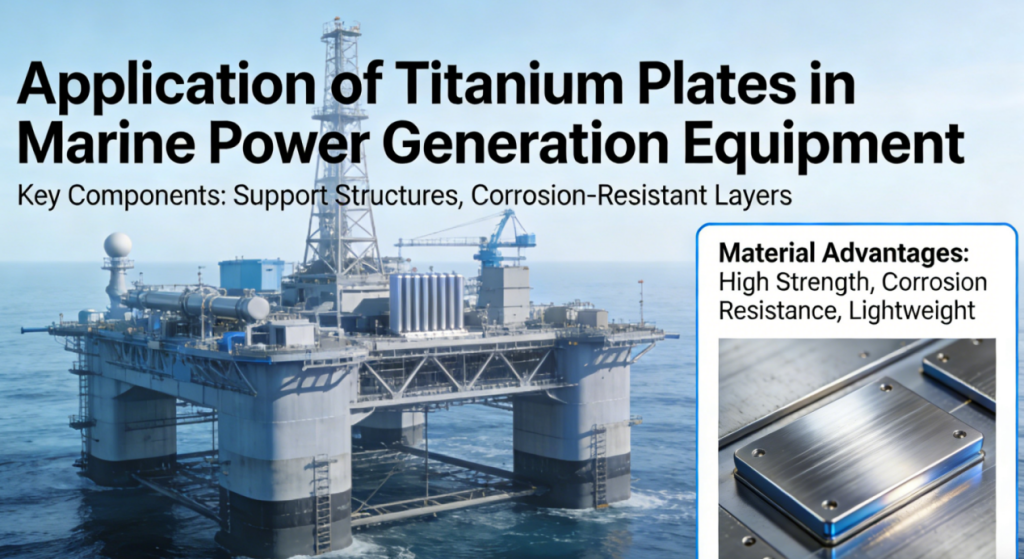
What Makes Titanium Plate and Titanium Sheet So Valuable?
1. Naturally Corrosion-Resistant
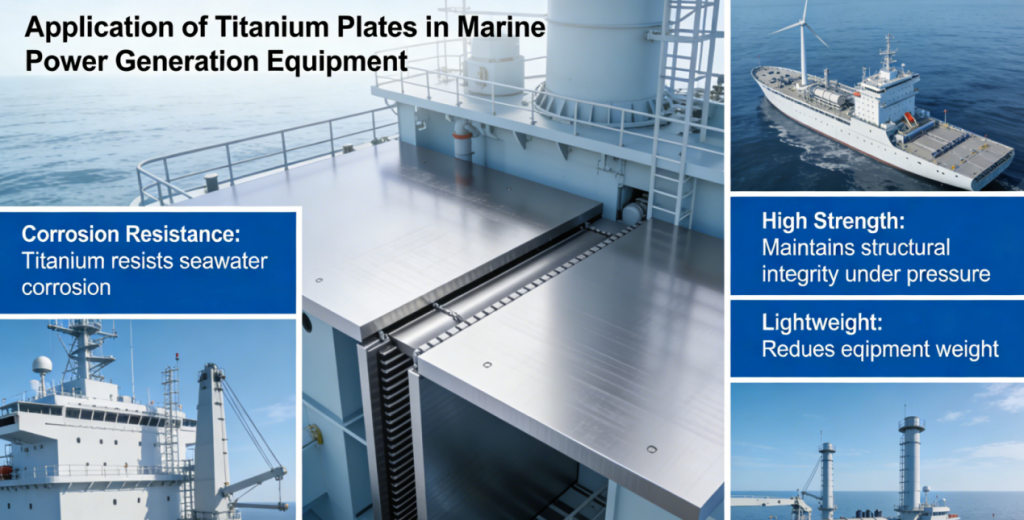
One of the biggest advantages of titanium plate and titanium sheet is their exceptional resistance to seawater corrosion.
Unlike many metals, titanium forms a protective oxide layer that:
Prevents rust
Resists chemical attack
Maintains performance over time
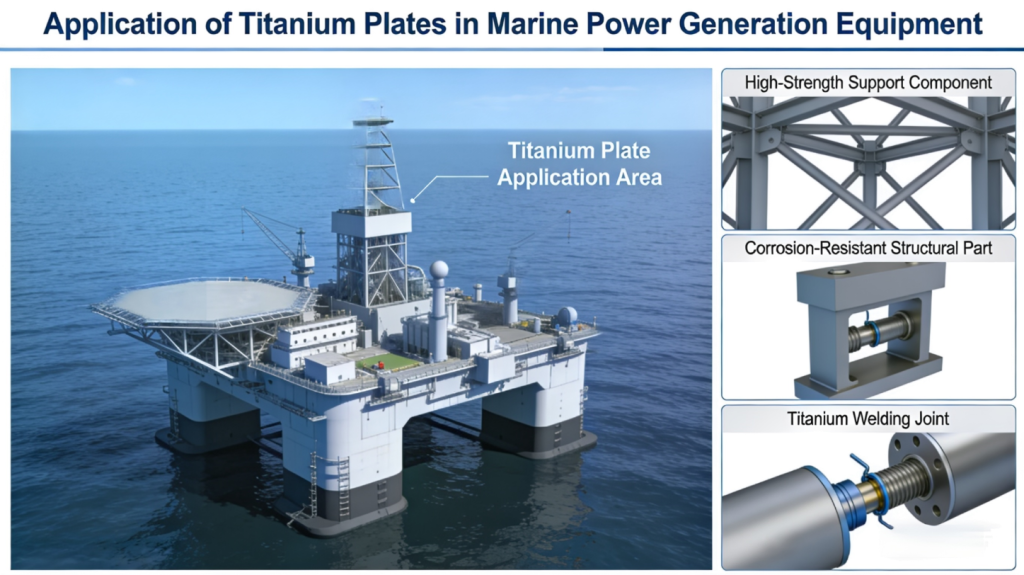
That’s why titanium is widely used in:
Heat exchangers
Condensers
Seawater cooling systems
Less corrosion means longer lifespan and lower maintenance costs—a big win for marine operators.
2. Strong Yet Lightweight
Titanium is about 40% lighter than steel but offers comparable strength.
For marine power plants, this means:
Easier installation
Reduced structural load
Better energy efficiency
Using titanium plates and titanium sheets helps engineers design systems that are both strong and lightweight—a rare combination.
3. Reliable Under Extreme Conditions
Marine power systems often run under high pressure and temperature for long periods.
Here, titanium plate and titanium sheet shine again:
Excellent creep resistance
Stable mechanical properties
Minimal deformation over time
This ensures that critical components remain reliable even after years of operation.
The Challenge: Titanium Isn’t Easy to Process
While titanium has impressive properties, it’s not the easiest material to work with.
Manufacturers often face issues like:
High deformation resistance
Low ductility at certain temperatures
Sensitivity to processing conditions
In simple terms: if you don’t process titanium plate or titanium sheet correctly, you risk defects like cracks or uneven structures.
That’s where simulation technology comes in.
How Simulation Technology Is Changing the Game
Smarter Processing with Thermal Simulation
Thermal simulation helps engineers understand how titanium plates and titanium sheets behave during hot forming.
By analyzing stress and strain, they can:
Choose the right temperature range
Avoid cracking
Improve consistency
It’s like having a “preview” of how the material will behave before actual production.
Optimizing Manufacturing with Numerical Simulation
Instead of relying on trial and error, engineers now use computer models to simulate:
Forging processes
Rolling operations
Temperature and strain distribution
For titanium plate manufacturing, this means:
Faster development cycles
Lower production costs
Better product quality
Controlling Performance Through Microstructure Simulation
The internal structure of titanium directly affects its performance.
With advanced simulation tools, manufacturers can:
Predict grain structure changes
Control phase transformations
Fine-tune mechanical properties
This ensures that every titanium sheet or titanium plate meets the demanding requirements of marine applications.
Why More Marine Projects Are Choosing Titanium
With all these advantages, it’s no surprise that titanium plate and titanium sheet are becoming more popular in marine energy projects.
Key benefits include:
Longer service life
Reduced downtime
Lower lifecycle costs
Higher reliability
When combined with modern simulation technologies, titanium becomes not just a high-performance material—but a smart investment.
Looking Ahead: The Future of Titanium in Marine Energy
As offshore energy continues to grow, the demand for durable, efficient materials will only increase.
We’re already seeing titanium plates and titanium sheets used in:
Offshore wind platforms
Tidal energy systems
Seawater desalination and cooling
With ongoing improvements in simulation and manufacturing, titanium will play an even bigger role in shaping the future of marine power.
Final Thoughts
In the challenging world of marine power generation, material choice can make or break a project.
Titanium plate and titanium sheet offer a powerful combination of:
Corrosion resistance
Strength and lightweight properties
Long-term reliability
And with the help of simulation technology, we can now unlock their full potential more efficiently than ever before.
If you’re working in marine engineering or energy systems, titanium isn’t just an option—it’s a material worth serious consideration.#titaniumplate #titaniumsheet #titaniumplateapplication #titaniumsheetmarine #marinepowerplantmaterials #marinepowergeneration