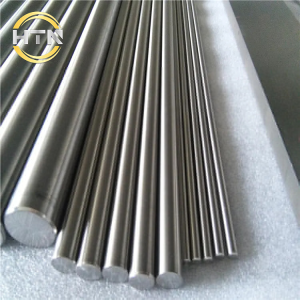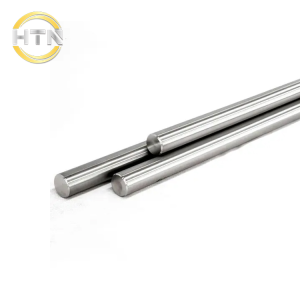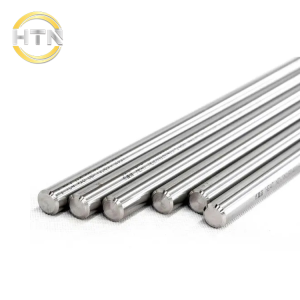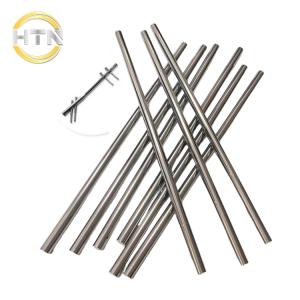
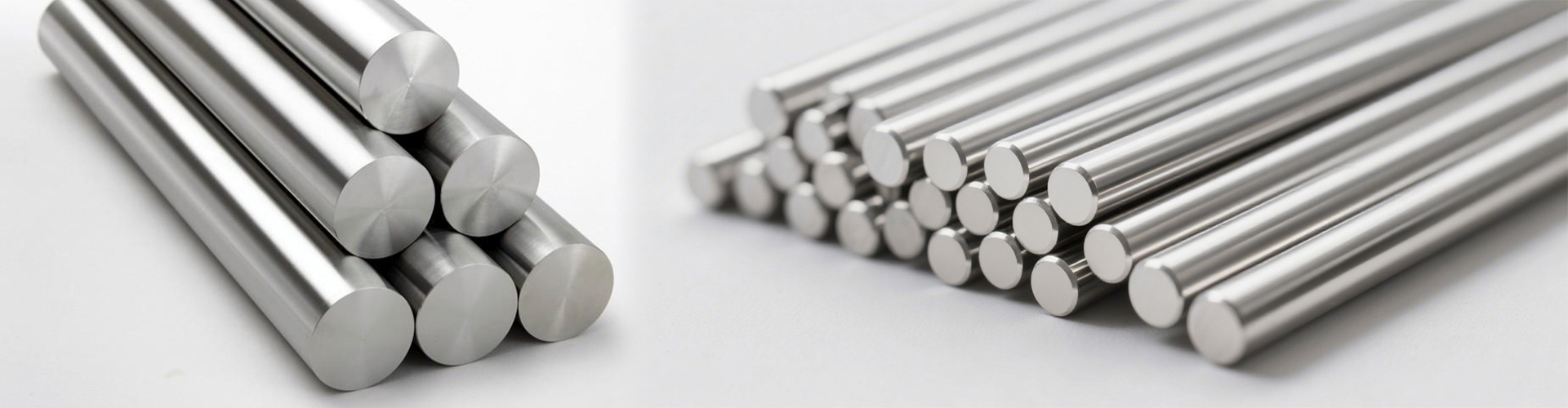
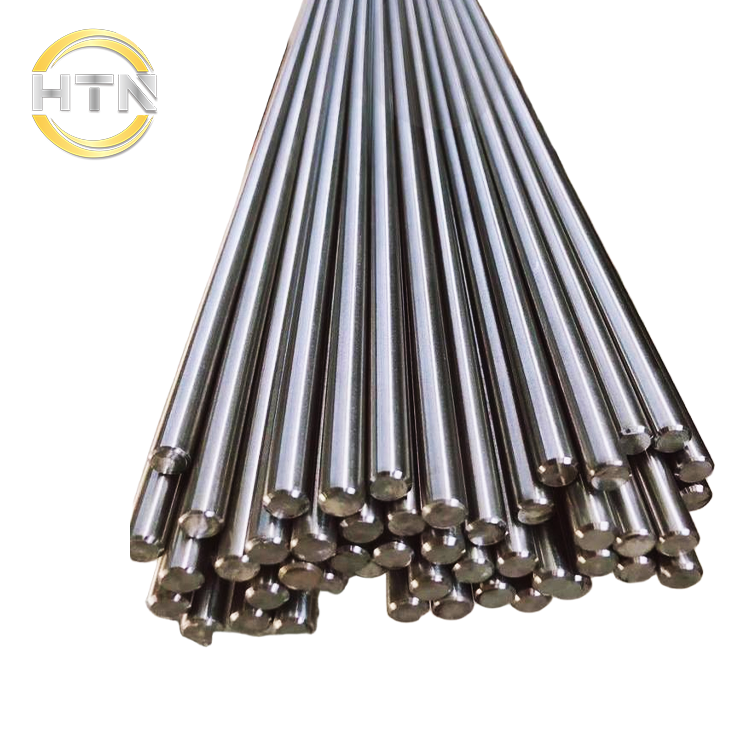
Gr2 Titanium Bar ISO5832-2
Brand Name: HTN.
Shape: Round.
Grade: Gr5.
Diameter:Φ8mm-400mm.
Regular Length:2500-3000mm.
Technique: Forged.
Surface: Polishing.
Executive Standard: ASTM B348、ISO5832-2、ISO5832-3.
Certification: ISO 9001:2015; ISO 13485:2016.
We accept the customized length size.
|
|


Details
Product Details:
Gr2 Titanium Bar
Gr2 commercial pure titanium bars, corresponding to the Chinese grade TA2, is a grade within the industrial pure titanium series that achieves the best balance of strength, formability and corrosion resistance. It belongs to the α-type titanium alloy and has excellent comprehensive processing performance and service reliability. Its strength is moderate, with the typical tensile strength σb ≥ 400 MPa, and the density ρ = 4.51 g/cm³. Thanks to its low density and high specific strength (σb/ρ ≈ 8.9×10⁴ N·m/kg), in critical structural components that require lightweighting and corrosion resistance, its specific strength is significantly superior to that of ordinary stainless steel and alloy steel. Titanium alloys generally have a lower thermal conductivity. The thermal conductivity of Gr2 titanium is approximately λ = 16.4 W/(m·K), although it is higher than that of Gr5 alloy, it is only about 1/4 of low-carbon steel and about 1/10 of aluminum.
Characteristics of Gr2 titanium bar
✅ Good strength with excellent ductility
✅ Superior corrosion resistance in aggressive environments
✅ High strength-to-weight ratio
✅ Lightweight (≈60 % of steel)
✅ Easy to fabricate, weld, and machine
✅ High thermal stability and biocompatibility
Chemical composition
| Category | Element | Content requirements (typical values) | Function & Influence |
| Base Metal | Ti | Balance, usually>99.2% | Provides base properties and forms a protective oxide film |
| Core Controlled Elements | O | ≤ 0.25 | Interstitial element, main strengthening element. Increases strength; excess reduces ductility. |
| Fe | ≤ 0.30 | Substitutional element/common impurity. Increases strength; excess may impair corrosion resistance. | |
| C | ≤ 0.08 | Interstitial impurity. Strictly controlled to prevent embrittlement. | |
| N | ≤ 0.03 | Strong interstitial element. Sharply increases strength and hardness but severely reduces ductility. | |
| H | ≤ 0.015 | Harmful interstitial element. Excess can cause hydrogen embrittlement. | |
| Other Residual Elements | Al | ≤ 0.50 | Considered an impurity in pure titanium. |
| V | ≤ 0.50 | Considered an impurity in pure titanium. | |
| Each Other Element | ≤ 0.10 | Individual limit for unspecified elements. | |
| Total Other Elements | ≤ 0.40 | Total limit for all other residual elements not listed. |
Mechanical Properties
| Property | Symbol | Typical Value / Range | Notes |
| Tensile Strength | σ_b | ≥ 400 MPa (Minimum value); | Standard requirement for bar at room temperature. |
| ~ 450 – 550 MPa (common range) | Actual values typically fall between min and this range. | ||
| Yield Strength (0.2% Offset) | σ_{0.2} | ≥ 275 MPa (Minimum value) | Stress at which material begins to deform plastically. |
| ~ 350 – 450 MPa (common range) | |||
| Elongation | δ | ≥ 20% (minimum value) | Measured on a specimen with 4D or 50mm gauge length. Indicates material ductility. |
| Reduction of Area | ψ | ≥ 30% (typical value) | Maximum plastic deformation before fracture. |
| Density | ρ | 4.51 g/cm³ | About 57% of steel’s density, 1.6 times that of aluminum. Density |
| Specific Strength | σ_b / ρ | ~ 8.9 × 10⁴ N·m/kg | Measures efficiency of strength-to-weight ratio. |
| Elastic Modulus | E | ~ 105 – 110 GPa | Approximately half that of steel, indicating lower stiffness. |
| Hardness | HB | ~ 160 – 200 HB | Typically Brinell Hardness range. |
| Thermal Conductivity | λ | ~ 16.4 W/(m·K) (at room temperature) | Relatively low thermal conductivity. |
| Coefficient of Thermal Expansion | α | ~ 8.6 × 10⁻⁶ /K (20-100°C) | Similar to Stainless Steel. |
Please Note:
- The above minimum values (such as ≥ 400 MPa) are mainly based on the regulations for annealed bars as stipulated in standards such as ASTM B348 Grade 2. The common range values and physical properties are typical industrial data.
- State influence: Performance is significantly affected by the material state (such as annealed state, cold-worked state). This table is mainly based on the annealed condition.
- Test conditions: Mechanical performance tests are usually conducted at room temperature (approximately 20°C).
- Data variation: The actual performance values may slightly fluctuate due to specific production processes, batches, testing methods, and final product dimensions. For critical applications, the actual test certificates provided by the material supplier (MTC) should be taken as the reference.
Corrosion Resistance
- It’s one of the biggest advantages of Grade 2 titanium bar:
- Forms a stable, protective oxide layer that resists corrosion in many environments.
- Excellent resistance in seawater, marine atmospheres, chemical acidic/oxidizing environments, and chloride-containing media. Metals Maintains corrosion resistance even at elevated temperatures (e.g., up to ~300 °C in seawater).
This corrosion protection is a key reason Gr2 titanium is widely used where durability in harsh environments is required.
Fabrication & Formability
Grade 2 titanium bars are user-friendly in manufacturing:
- Excellent weldability — can be welded using standard methods like TIG with good joint strength.
- Good cold formability and machinability — easier to machine and shape than many high-strength alloys.
- Can be cold worked to increase strength (no significant heat-treatment strengthening possible).
The production process of titanium bar
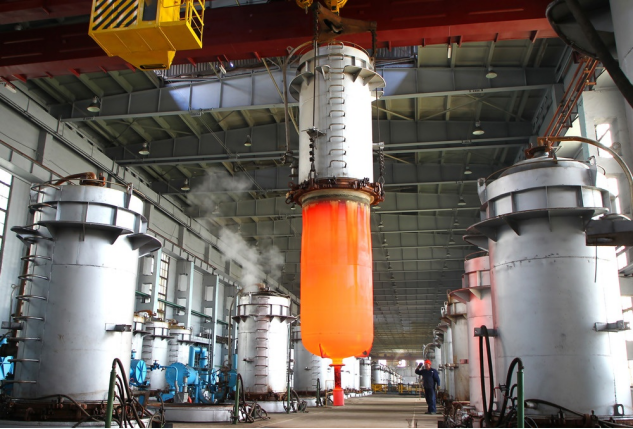
1. Raw Material Preparation
The production of titanium bars begins with titanium sponge, which is produced from titanium dioxide (TiO₂) through the Kroll process. The sponge is crushed, screened, and chemically analyzed to ensure compliance with required purity levels. Alloying elements such as aluminum, vanadium, molybdenum, or iron may be added depending on the specified titanium grade (e.g., Grade 2, Grade 5).
2. Melting and Alloying
Prepared titanium sponge and alloying elements are melted under a high-vacuum or inert argon atmosphere to prevent contamination from oxygen, nitrogen, and hydrogen.
Common melting methods include:
Vacuum Arc Remelting (VAR)
Electron Beam Melting (EBM)
The molten metal is cast into titanium ingots. For critical applications, the ingots may undergo double or triple remelting to ensure chemical homogeneity and structural integrity.

3. Ingot Conditioning
After solidification, the ingots are:
Surface-inspected;
Machined or ground to remove surface defects;
Ultrasonically tested for internal flaws;
This step ensures the ingot is free from cracks, inclusions, or segregation before further processing.
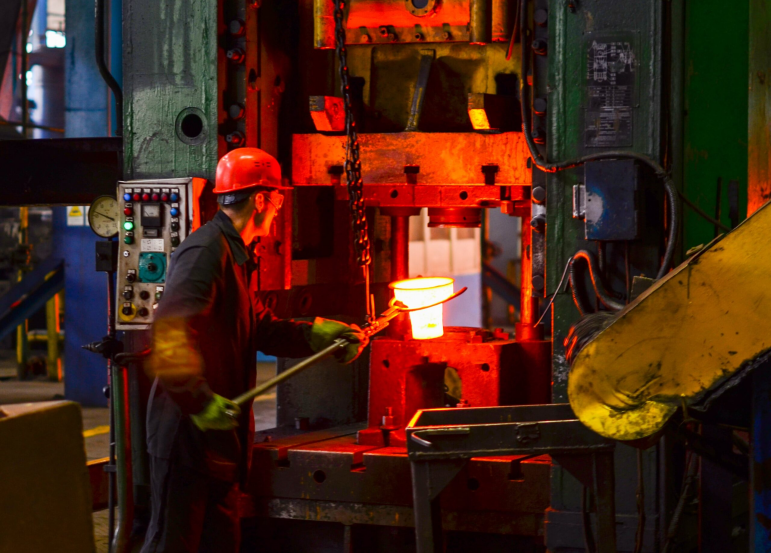
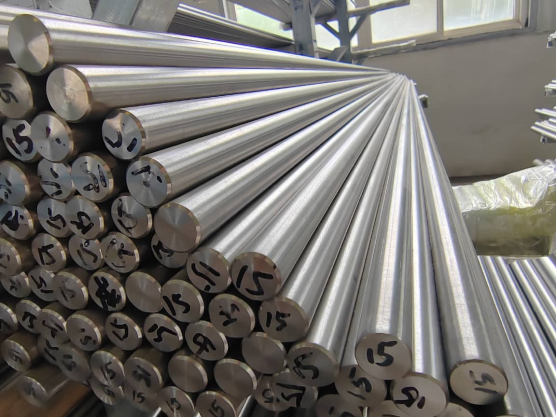
4. Hot Working (Forging or Rolling)
The conditioned ingots are reheated to a controlled temperature (typically 800–1100°C, depending on the grade) and then mechanically deformed.
Processing methods include:
Hot forging for large-diameter bars;
Hot rolling for smaller diameters;
This step refines the grain structure, improves mechanical properties, and reduces the ingot into billets or rough bars.
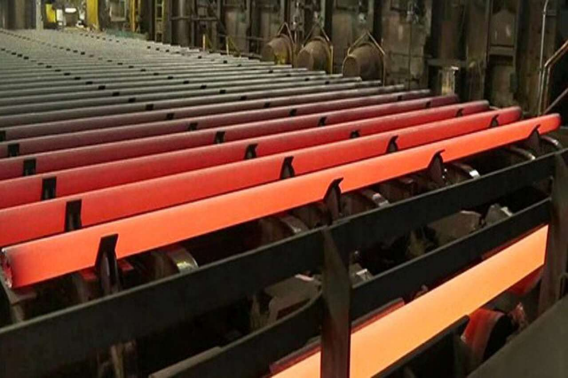
5. Bar Forming
The billets are further processed into final bar shapes using:
Hot rolling.
Hot extrusion.
Combination of rolling and forging.
Dimensional control is carefully monitored to meet customer specifications for diameter, straightness, and tolerance.
6. Heat Treatment
Titanium bars undergo heat treatment to achieve the desired mechanical properties.
Typical treatments include:
Annealing – improves ductility and stress relief
Solution treatment and aging – enhances strength (mainly for alloys like Ti-6Al-4V)
Heat treatment is performed in vacuum or inert gas furnaces to avoid oxidation.
7. Straightening and Sizing
After heat treatment, bars may experience slight distortion. They are:
Straightened mechanically
Precision-sized through peeling or centerless grinding (if required)
This ensures tight dimensional accuracy and smoothness.
8. Surface Finishing
Surface finishing improves appearance, cleanliness, and usability.
Common finishing methods:
Pickling
Grinding
Polishing
Turning (peeled bars)
The final surface condition depends on customer or industry standards.
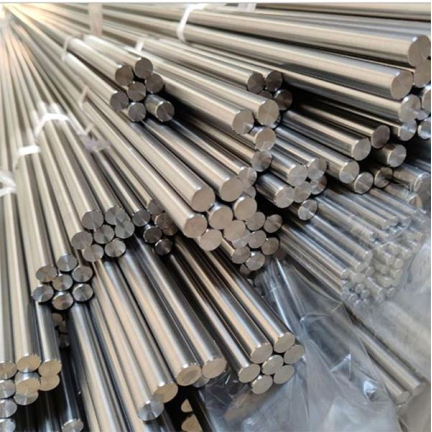
9. Inspection and Quality Control
Each titanium bar is subjected to strict quality inspections, including:
Chemical composition analysis;
Mechanical testing (tensile, yield, elongation);
Ultrasonic testing;
Dimensional inspection;
Surface defect examination;
All inspections are conducted according to standards such as ASTM, AMS, ISO, or EN.
10. Cutting, Packaging, and Dispatch
Approved bars are cut to required lengths, labeled with heat numbers and grade details, and packed using protective materials to prevent contamination or damage during transportation.
Application:
Chemical and petrochemical engineering;
Marine engineering and shipbuilding;
Aerospace;
Medical and biological implants;
Energy and power;
Automotive industry;
Sports and leisure products